
Bought a standing desk but stopped using It? It's possible to restart.
Standing desks promise relief from long hours of sitting. But after the initial excitement, it's not uncommon for the standing function to be hardly used. Does it mean standing desks don’t work? Not really. Its mostly due to unclear advice about how to make the standing habit sustainable.
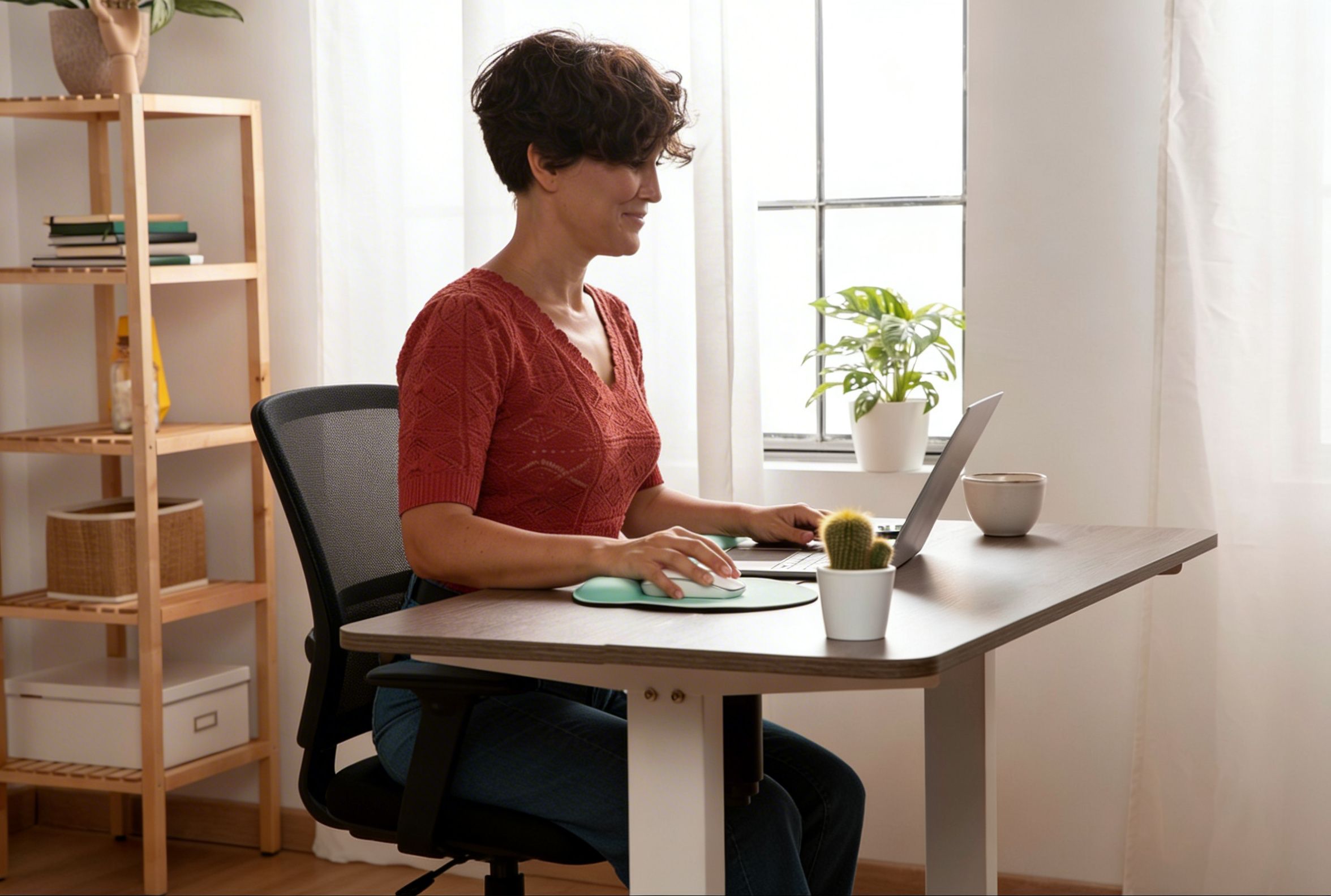
Here's how you can get back to a sit-stand routine and continue it reliably:
1. Stand with body weight evenly distributed over both legs
Spinal health is improved and fatigue is minimized when your body is balanced and relaxed.
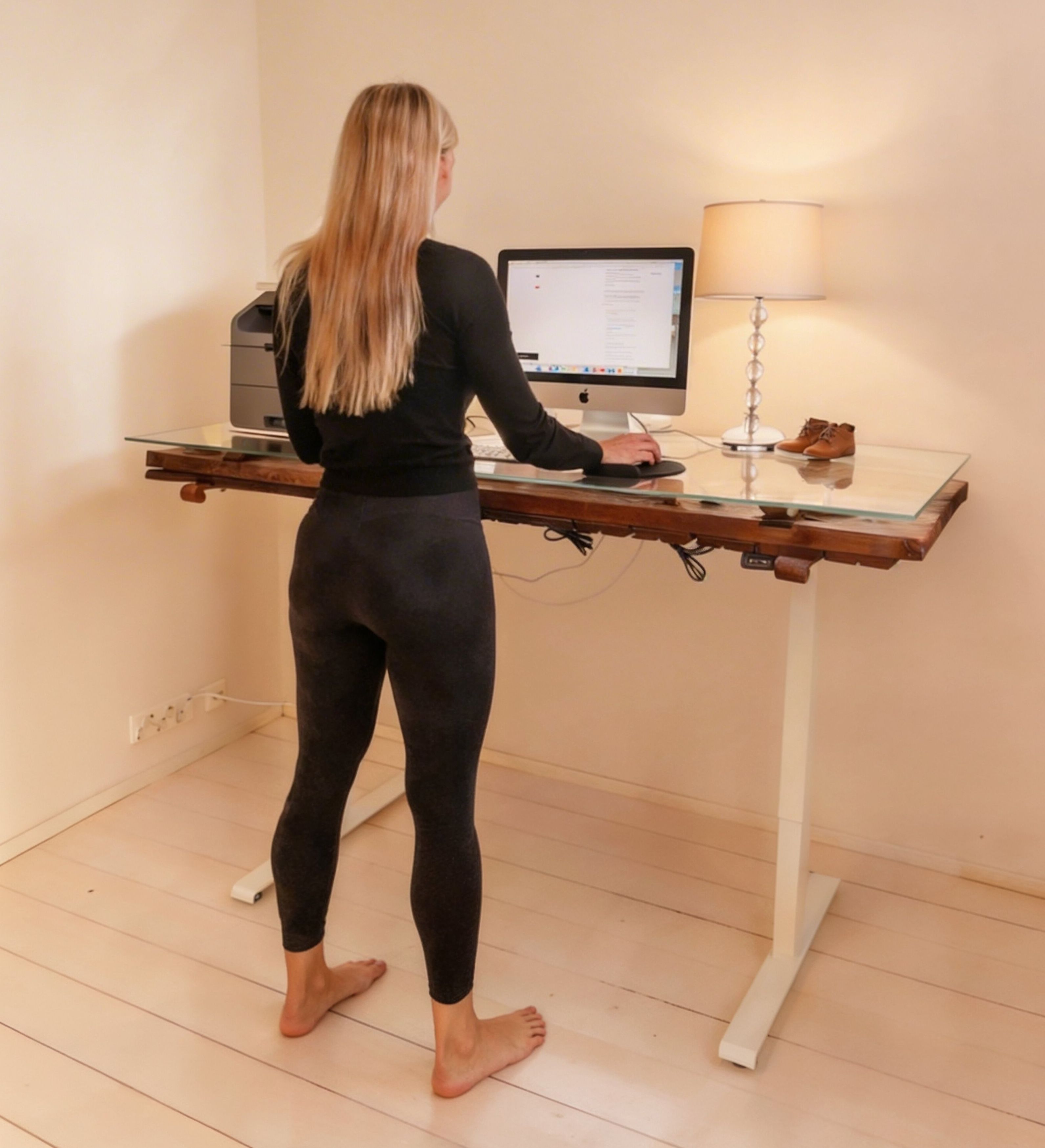
- Feet about shoulder-width apart. This automatically cuts down the tendency to leaning more on one side and keeps the spine straight
- Knees relaxed (not locked)
- Not wearing high heels when standing for work
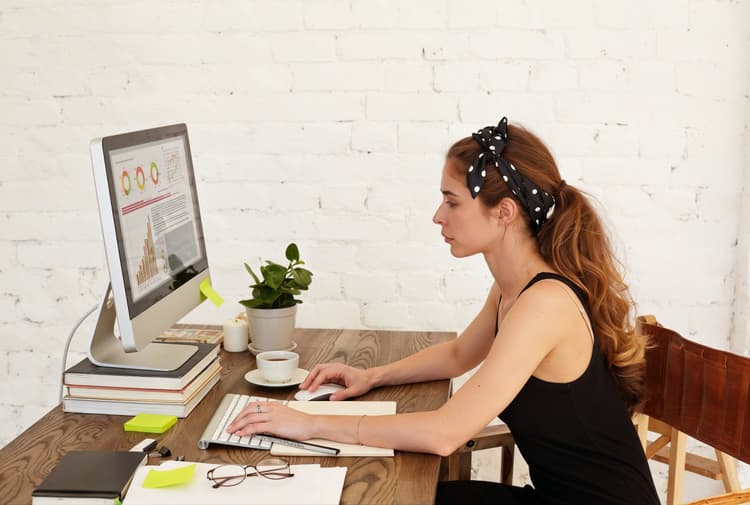
2. Raise desk so its just below the elbow, not higher
It's common to raise the desk too high wanting the screen comes to eye level. That's incorrect. Your key goal should be to ensure that your shoulders and lower back are protected.
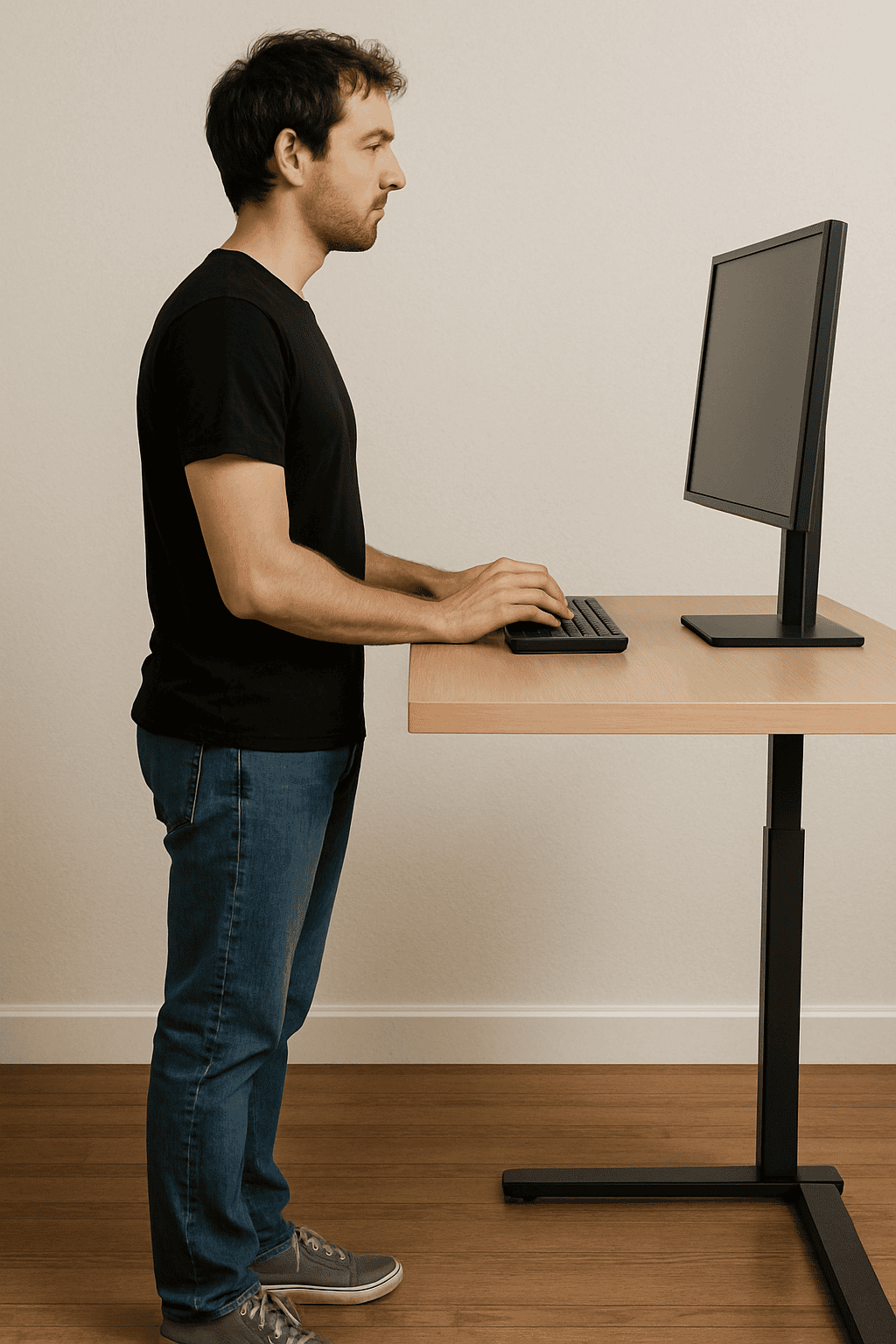
- If desk is too high, it causes the shoulders to be lifted and leads to neck and upper-back strain
- If desk is too low, it makes you stoop down, causing lower-back discomfort
- Keeping the desk just below elbow level ensures shoulders and back are relaxed
- Once the desk is set, you can now adjust your screen height independently
Also read
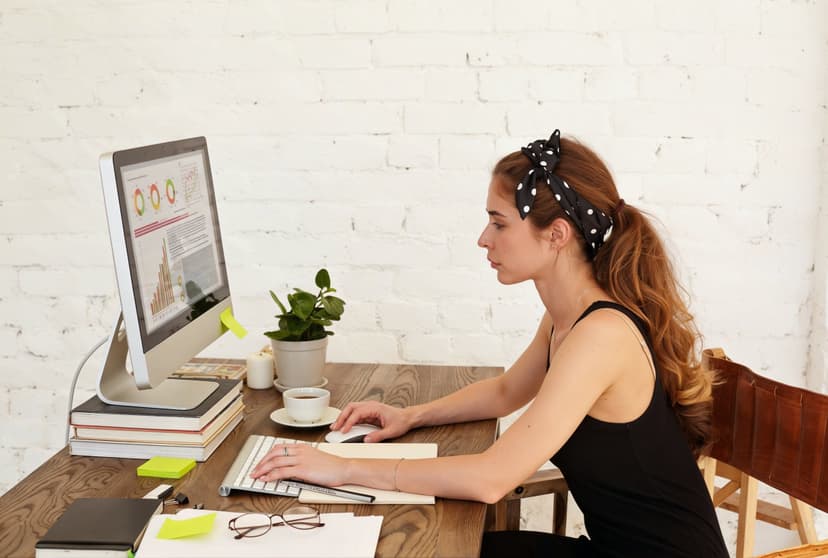
3. Alternate between sitting and standing positions using 40:20 rule
Prolonged standing is what kills the good habit 90% of the time. When you stand too much without a sitting break, it becomes too painful and tiring - and then you think it's not worth standing.
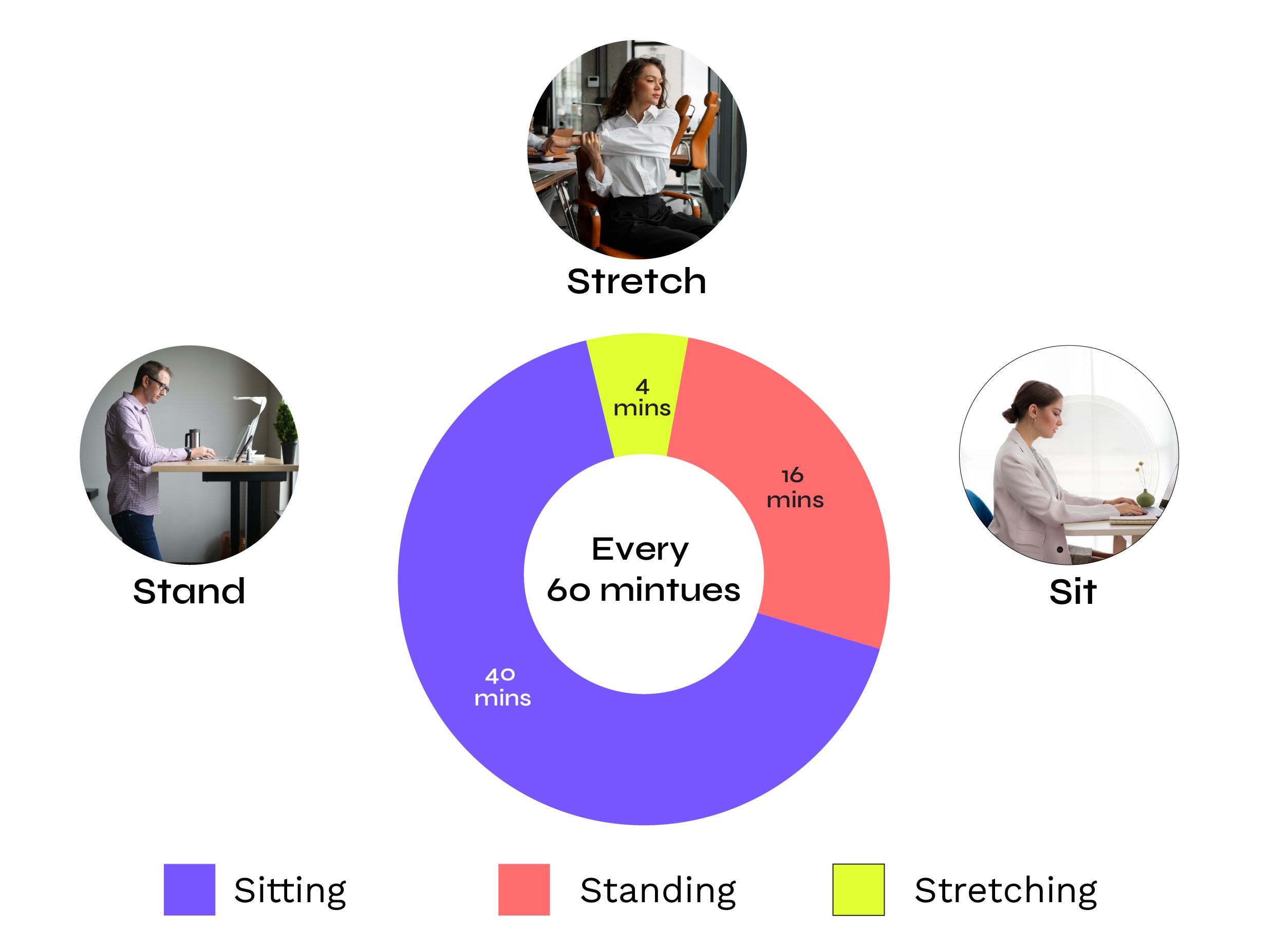
Source: Cornell University
- Every hour, 40 mins of sitting, 16 mins of standing and 4 mins of movement is recommended
- To make it easier, just follow the 40 Sitting : 20 Standing routine
- Alternate between sitting and standing in this fashion throughout the day
- Most desks allow you to set reminders - if not, use your Apple watch or phone alarm as a reminder
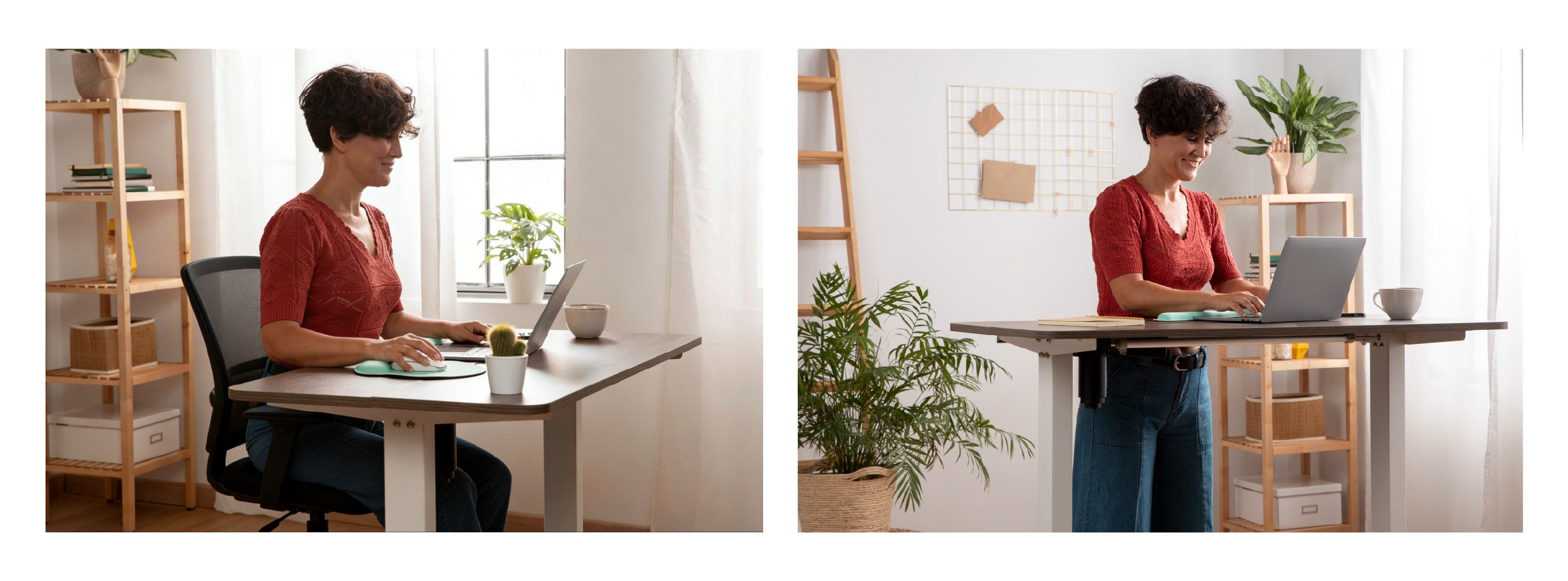
As a final takeaway, standing can become a long term health habit if you avoid the common pitfalls of standing without a balanced posture, setting the desk too high and standing for too long.
Explore other articles

Setup

Ergo Hacks

Posture
Ergonomic hacks for home office - better posture at no extra cost.
Creative and affordable ergo tips to make remote work comfortable and productive.

Health
How to reduce Digital Eye Strain (DES) without reducing screen time
Practical ergo tips to protect your eyes while using the computer and phone.

Fitness
Health
Why your back pain doesn't go away and how ergonomics can help.
Know why expensive therapy isn't enough and how focusing on ergo root causes can help.