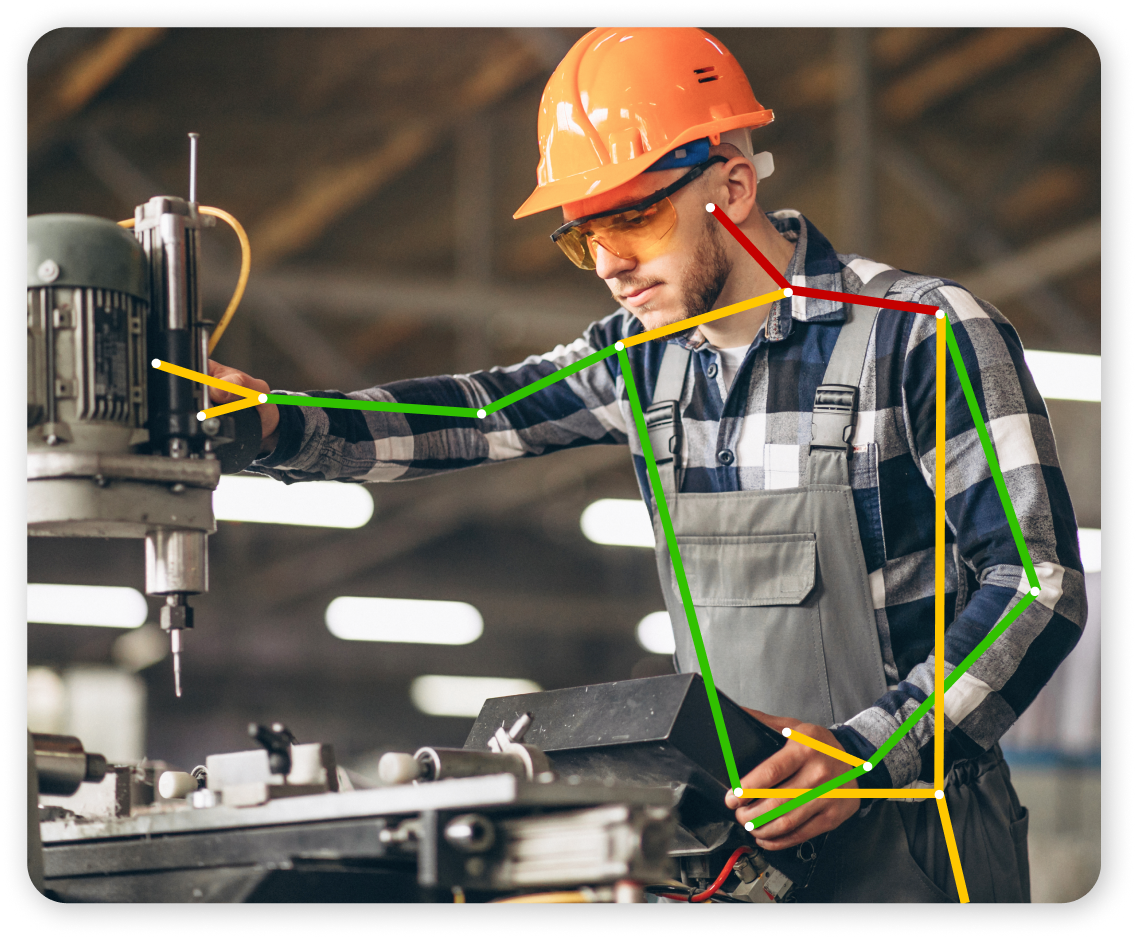







01. AI Video Assessment
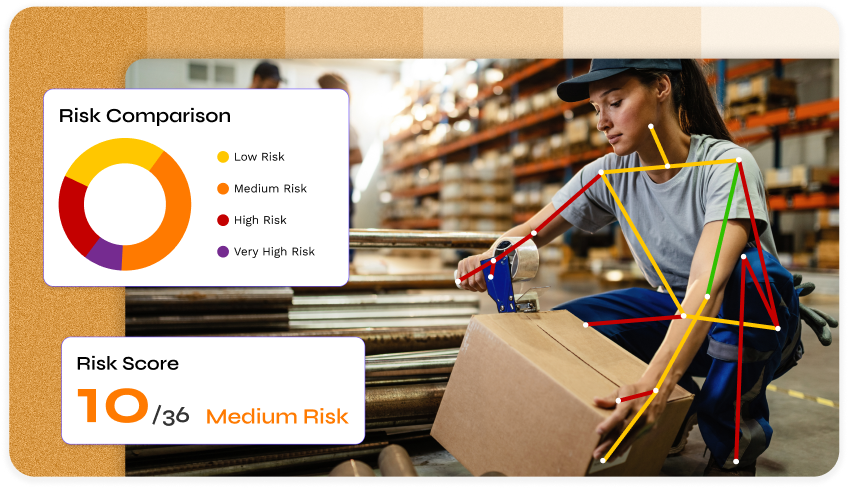
Upload any production task video. BalanceFlo scores posture and produces prioritised recommendations.

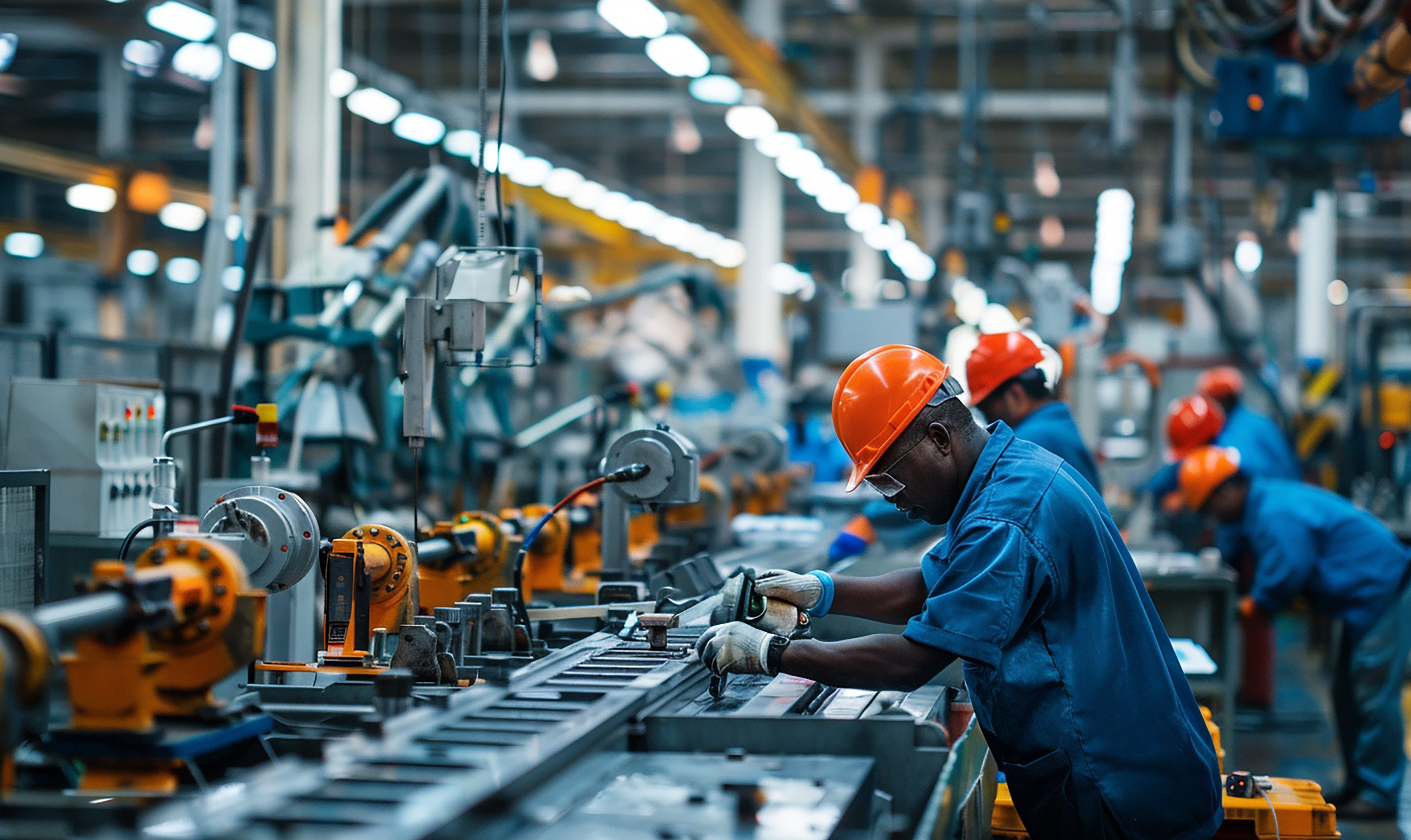
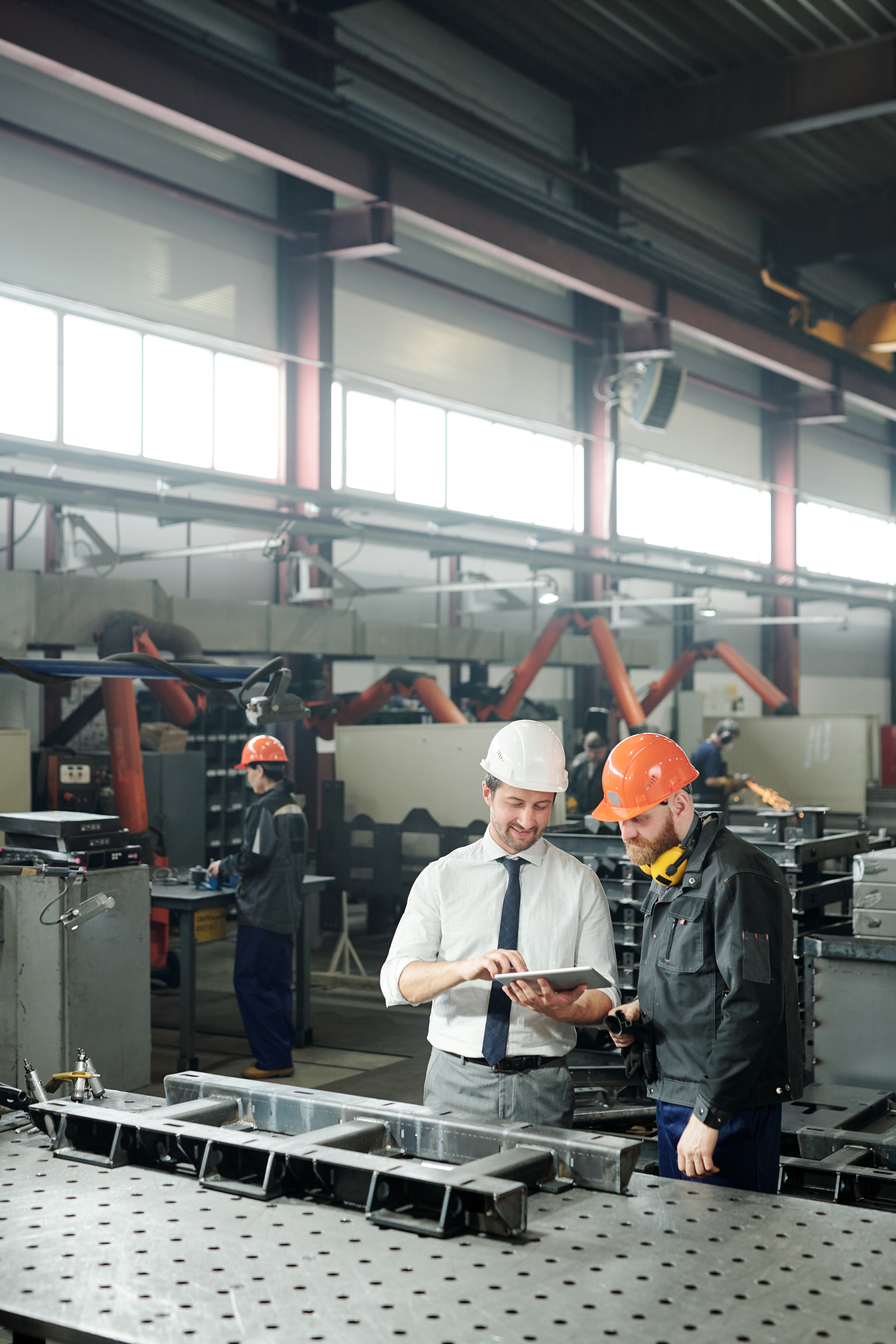
Repetitive tasks, heavy loads, and constrained postures. BF Industrial's AI video analysis and REBA/RULA scoring give safety teams plant-wide visibility into which tasks, which lines, and which workers carry the highest risk - before an injury happens.
30%
Of all manufacturing injuries are musculoskeletal disorders - the single largest injury category across the sector
$15B+
Annual cost of MSDs in U.S. manufacturing - direct and indirect combined
57 days
Average days away from work per manufacturing MSD - the longest of any major industry segment
3.5×
Every $1 in direct MSD cost generates $3.50 in indirect costs: lost productivity, temp cover, training, and management time


Manufacturing ergonomic risk isn't one thing - it changes by task, by line, and by shift. The most common exposure patterns are:
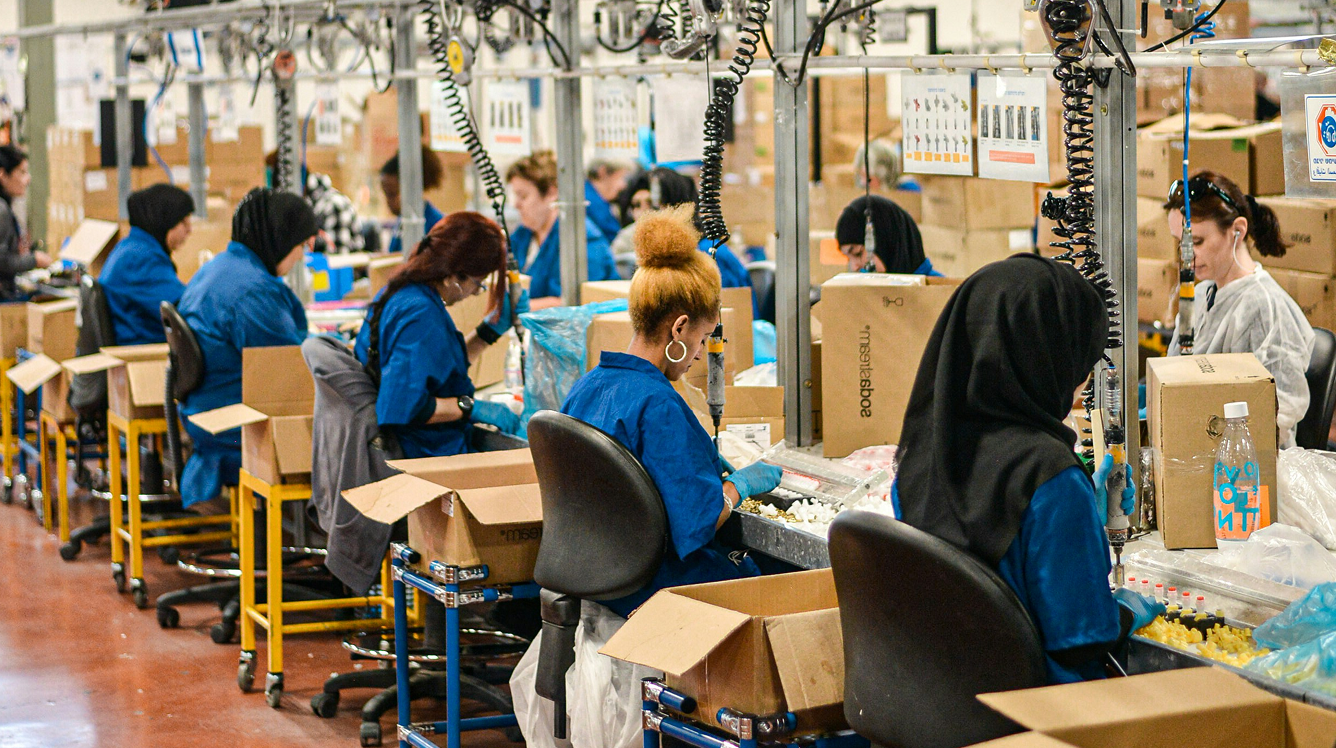
Assembly line cycle times as short as 30 seconds create extreme cumulative strain - particularly in automotive, electronics, and food processing
Tightening fasteners, operating hand tools, and part handling require sustained grip force that leads to upper extremity MSDs
Holding parts, tools, or postures for extended periods without movement creates fatigue in stabilising muscles far exceeding dynamic work
Grinders, impact wrenches, presses, and vibratory conveyors generate hand-arm and whole-body vibration with cumulative neurological and vascular consequences
Stations built for average worker dimensions create chronic awkward postures for every worker outside that narrow profile
Moving components, raw materials, and finished goods creates peak loading exposure at transition points that are often not formally assessed
Extended shifts with inadequate recovery time compound the cumulative biomechanical load of high-frequency tasks
Manufacturing ergonomics programmes typically rely on assessment models that weren't built for the pace and scale of a modern production facility:
Upload any production task video. BalanceFlo scores posture and produces prioritised recommendations.
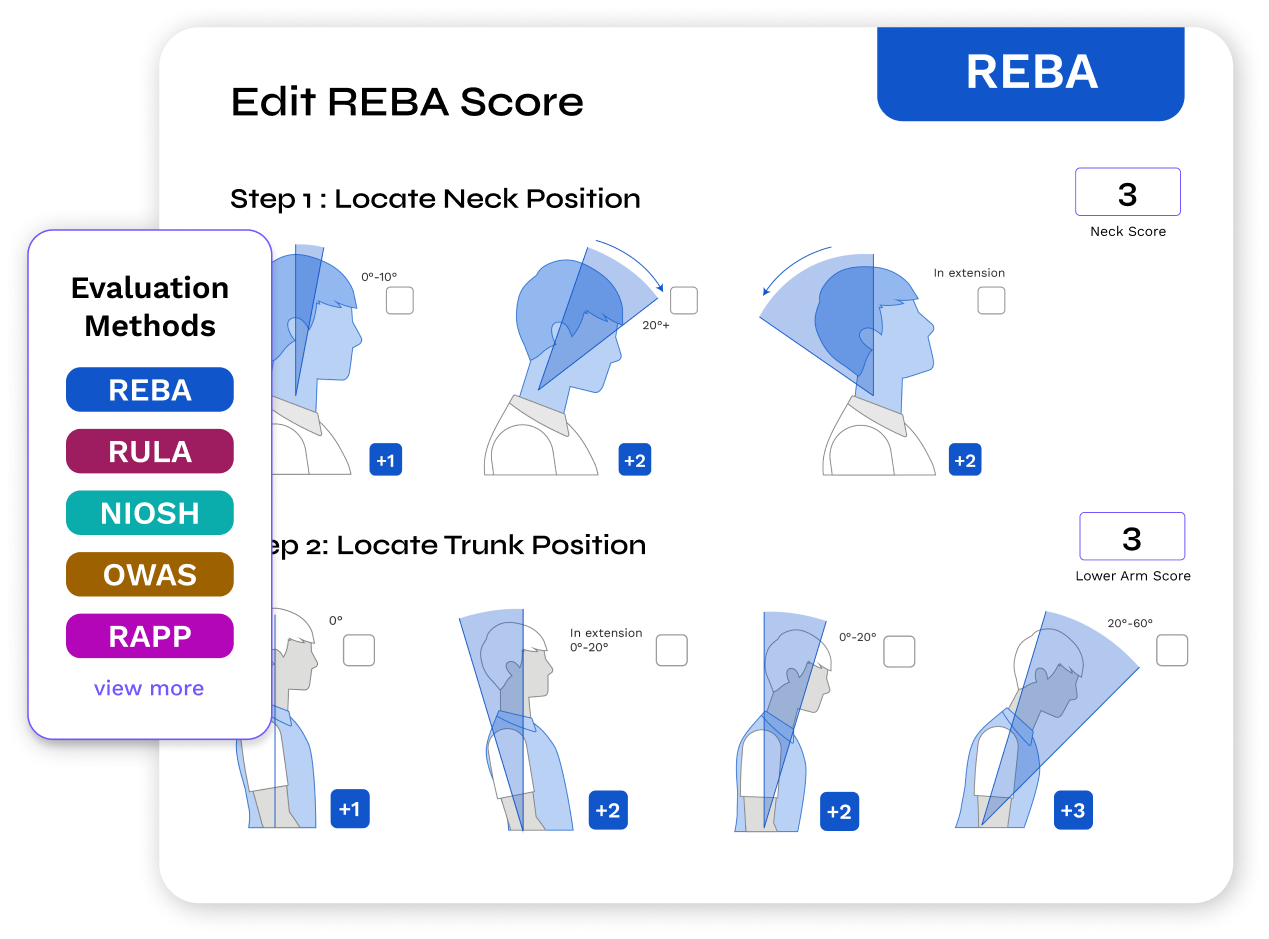
REBA, RULA, NIOSH, OWAS, RAPP, and framework-independent scoring are all included.
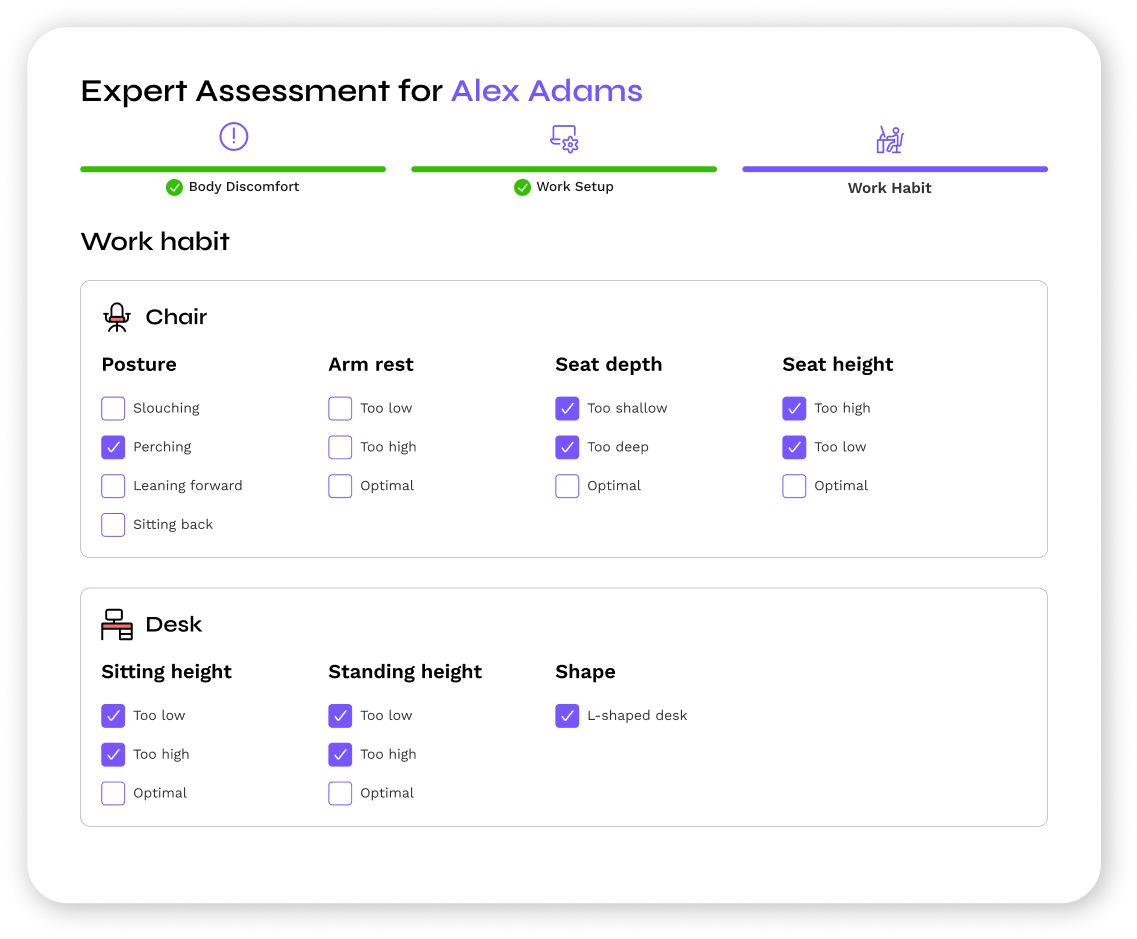
Certified ergonomists assess complex tasks and line redesigns with AI-enhanced consistency.
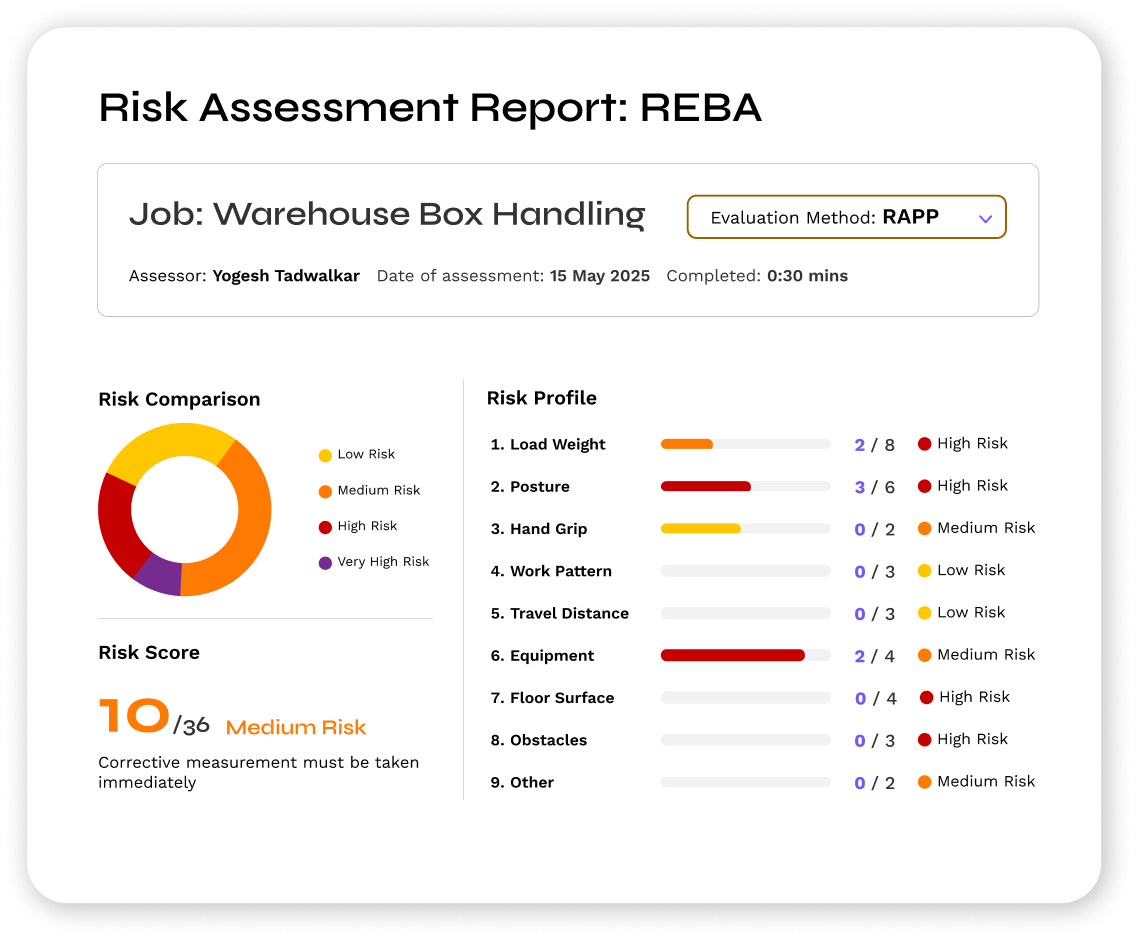
Dashboards show risk by plant, line, role, and task while tracking remediation progress.
Assessments generate costed equipment recommendations linked to supplier catalogues.
Production-focused training covers handling, repetition, awkward posture, and tool use.
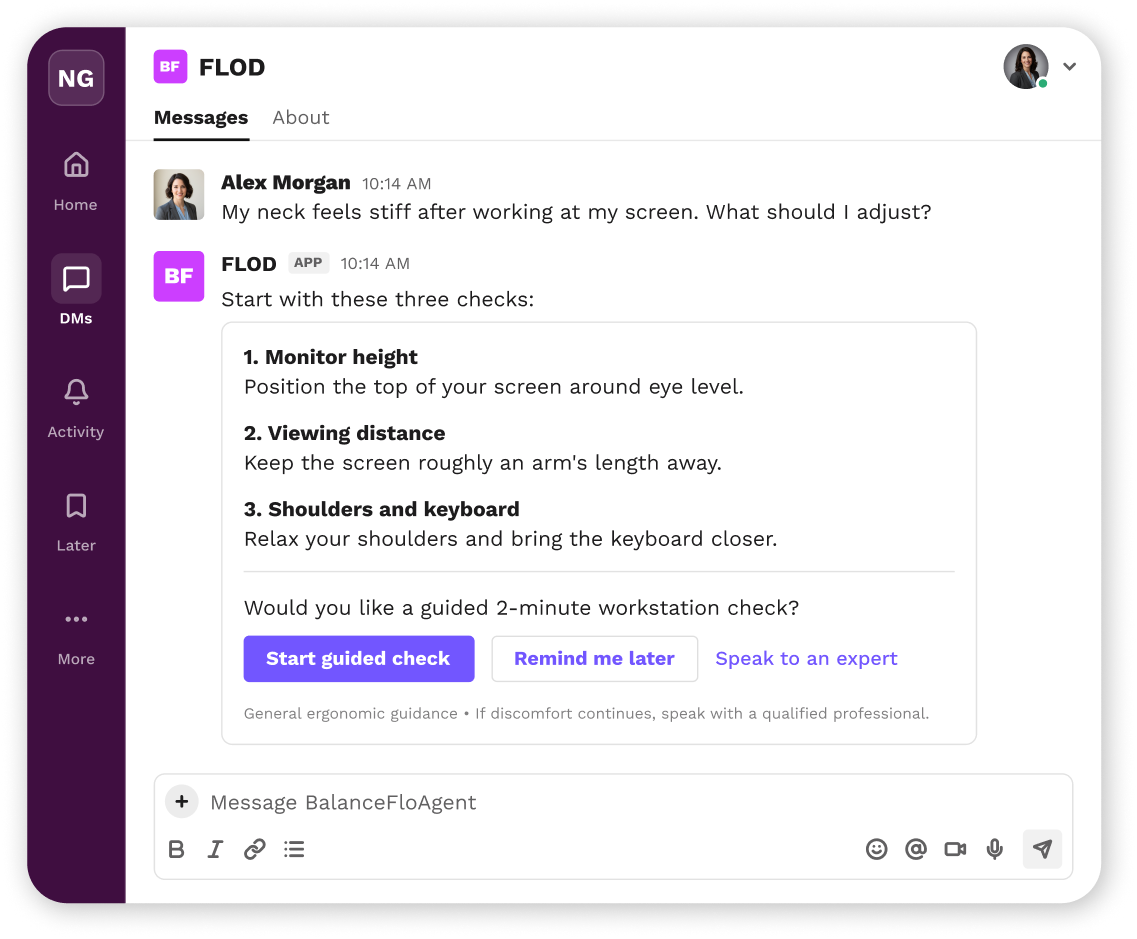
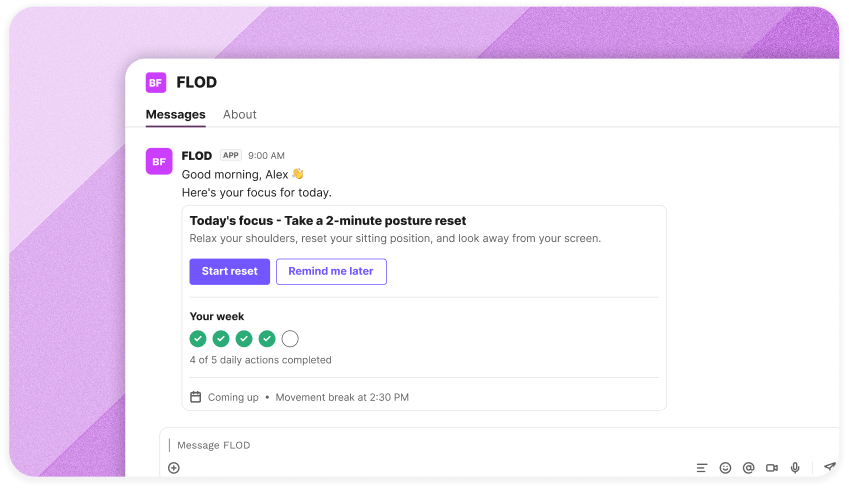
Daily nudges, campaigns, and chat guidance reinforce safe technique between assessments.
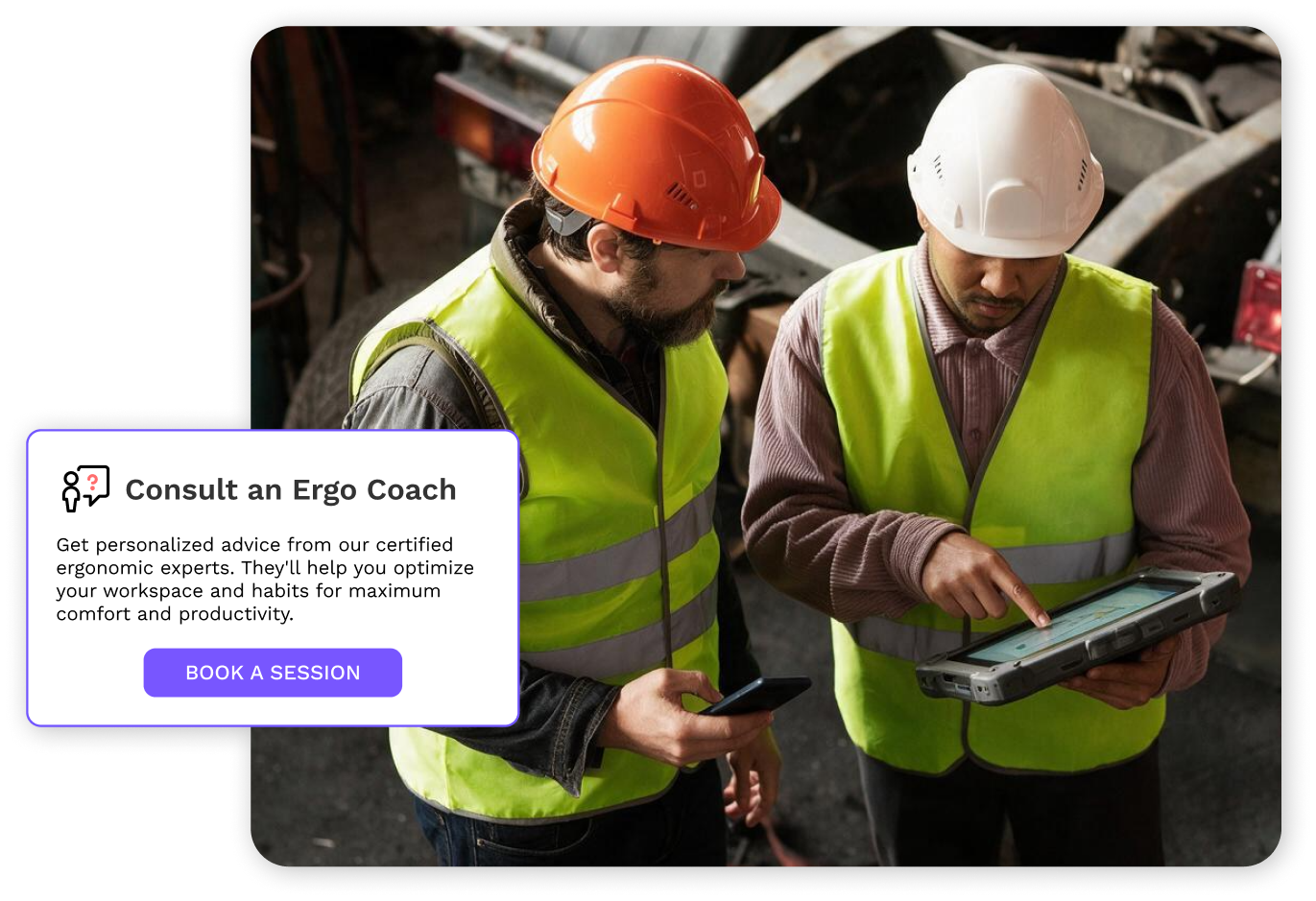
On-demand ergonomists support complex assessments, redesign reviews, and supervisor coaching.
Results manufacturing safety teams see after rolling out BalanceFlo across their plant network:
Reduction in ergonomics risk assessment time.
Increase in tasks and operations assessed and under active management.
Saving on total ergonomics programme costs versus traditional models.
Increase in legislative compliance rates for assessed manufacturing organisations.
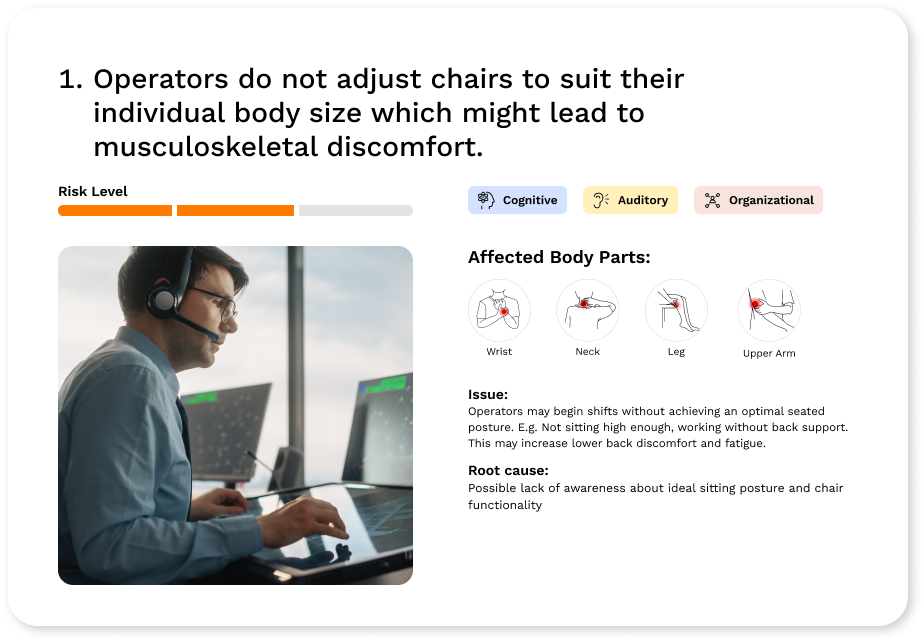
Intuitive visuals, clear risk indicators, plain-language outputs. Managers, employees, and safety teams take action immediately - no training course required to read a dashboard.
Practical guidance, regulatory updates, product insights, and workplace health trends - written by certified ergonomists, not content farms. If it's published under the BalanceFlo name, it's been reviewed by someone with a qualification to back it up.
Read Now
BalanceFlo's ROI calculator uses published BLS, OSHA, and academic data - and conservative estimates throughout. Here is what the numbers look like for a typical manufacturing workforce:

Answer 5 quick questions and get a plan matched to your workforce size, industry, and programme maturity - in under a minute.