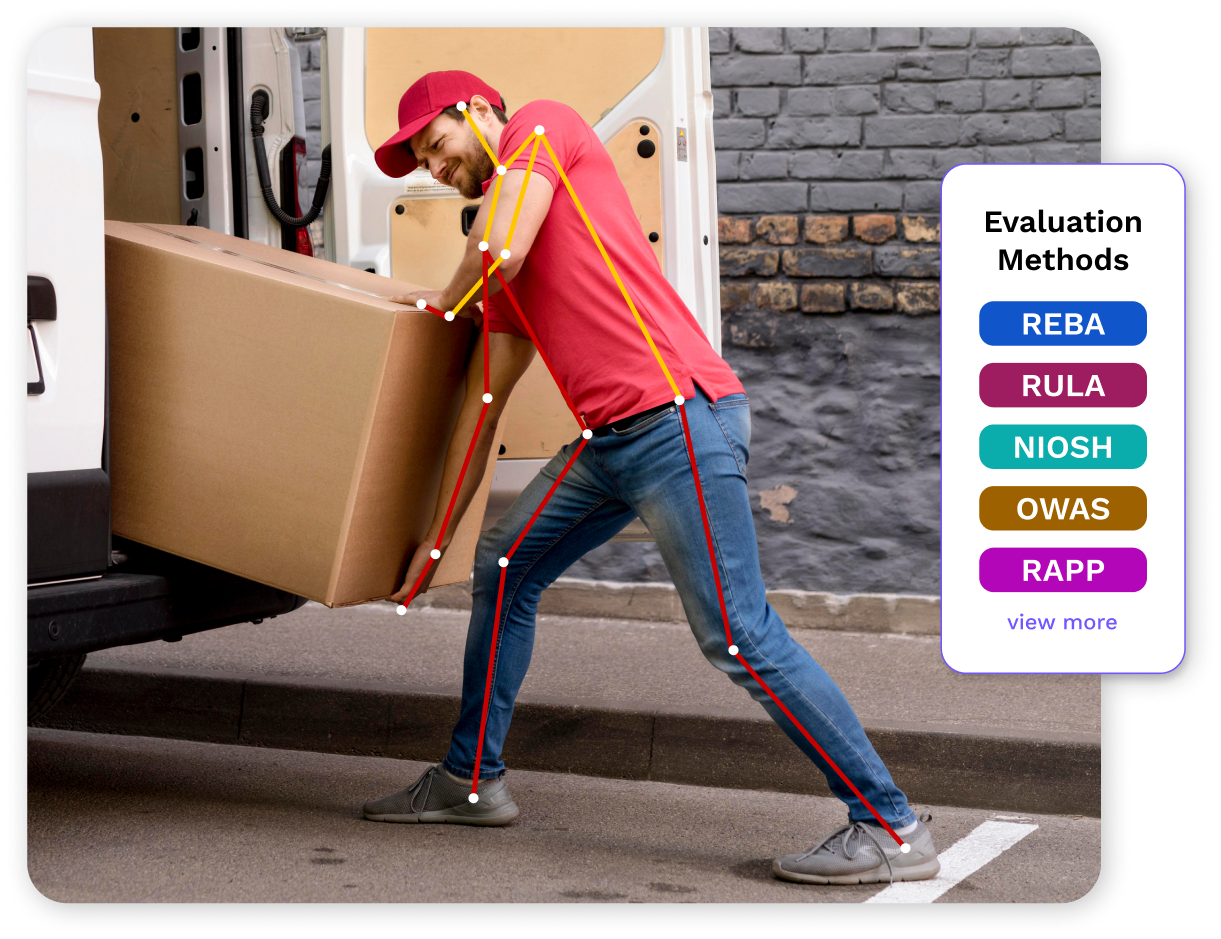

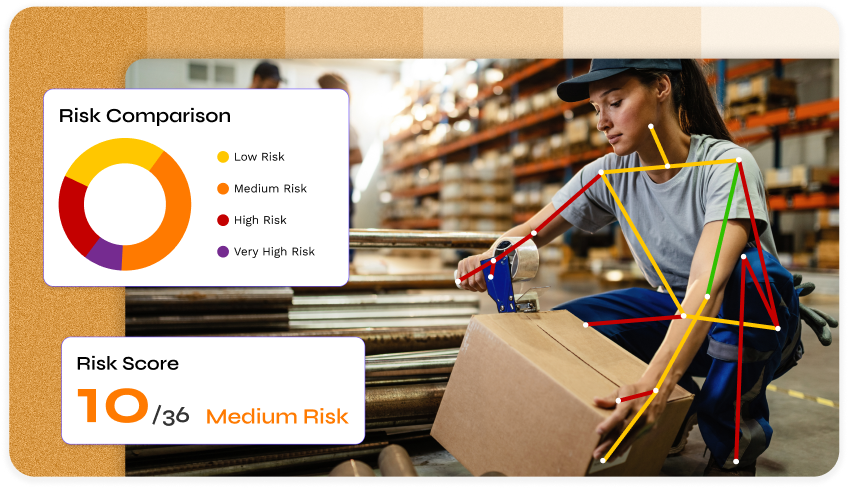







01. AI Video Assessment
Film loading, unloading, cab access, or depot tasks. BalanceFlo scores risk and returns fixes.

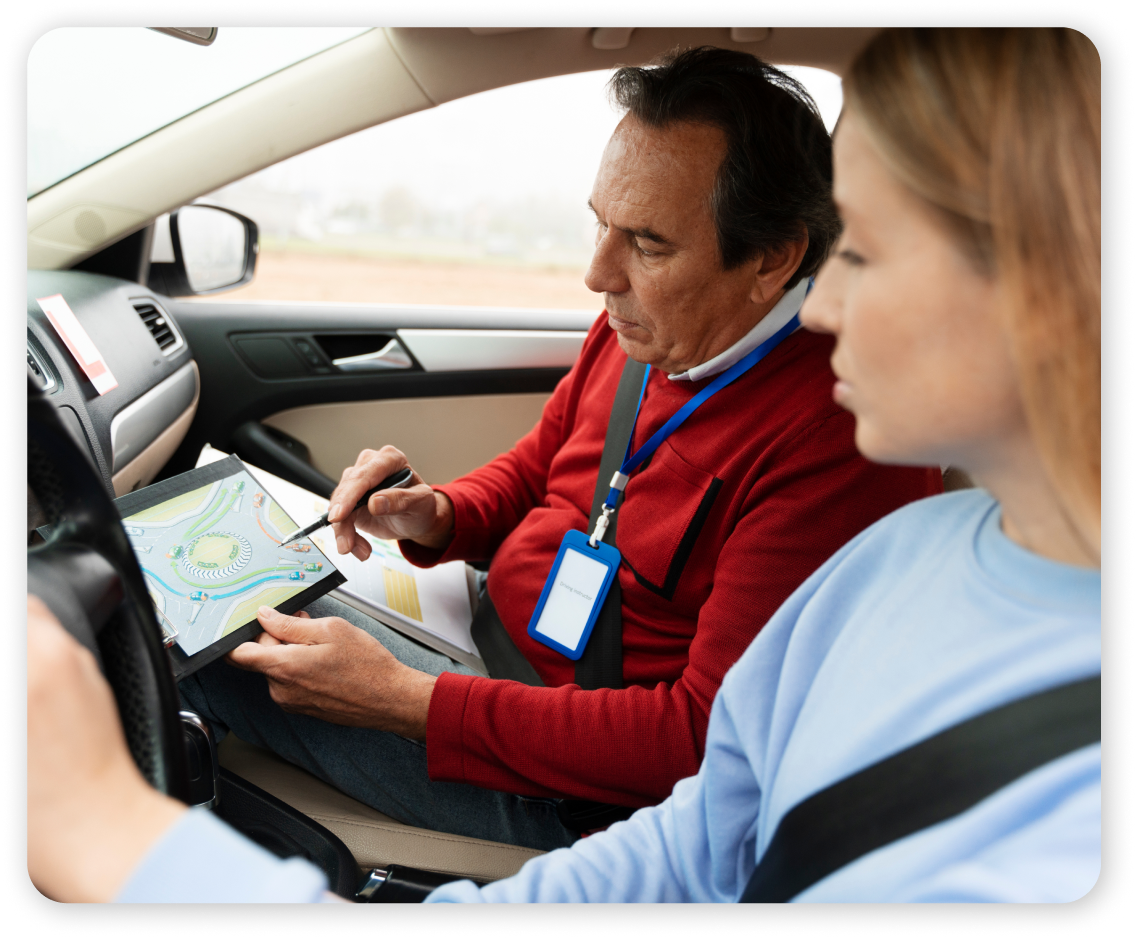
Driver posture, vibration exposure, loading and unloading risk - the ergonomics challenges of transport are chronic and often invisible until a claim arrives. BalanceFlo's AI-based assessments work for both in-cab and depot environments.


Top 3
Transport and storage ranks in the top 3 industries globally for MSD injury rates - every year
54%
Of professional drivers report chronic lower back pain they attribute directly to their driving occupation
$18B+
Estimated annual cost of driver MSDs across the U.S. and EU combined
3.4 years
Average career years lost per professional driver to MSD-related early departure from the workforce


Transport ergonomic risk isn't one thing - it changes by vehicle type, by route, and by task. The most common exposure patterns are:
Professional drivers are exposed to sustained WBV that causes cumulative spinal damage - regulated under EU Directive 2002/44/EC and equivalent OSHA guidance, but rarely actively managed
Hours in the same seated posture creates high lumbar disc pressure, hip flexor shortening, and gluteal loading that compounds over years of driving exposure
HGV and bus drivers perform hundreds of cab entry and exit movements per week - each involving asymmetric loading and impact force on lower extremities
Many transport roles combine driving with manual handling of cargo - creating compound exposure to both driving vibration and peak material handling risk
Non-ergonomic cab design forces sustained neck rotation and arm extension to reach controls - particularly in legacy vehicle fleets
Long-distance driving shifts create fatigue that amplifies injury risk during loading, unloading, and inspection tasks at journey end
Disrupted circadian patterns impair biomechanical awareness and recovery - compounding the chronic exposure of professional driving
Transport ergonomics programmes typically rely on approaches that weren't built for in-cab exposure or depot-based manual handling:
Film loading, unloading, cab access, or depot tasks. BalanceFlo scores risk and returns fixes.
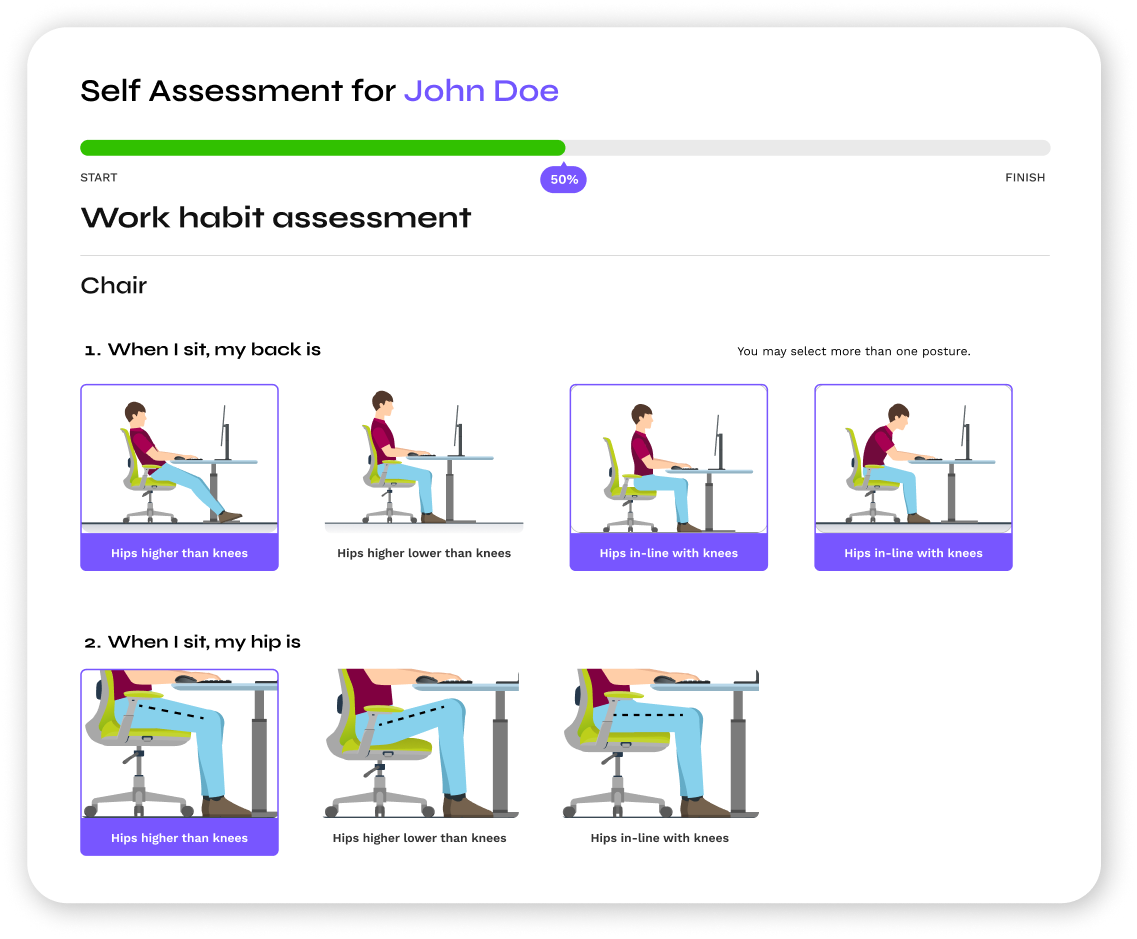
Driver and supervisor questionnaires capture vibration exposure, discomfort, and task demand.
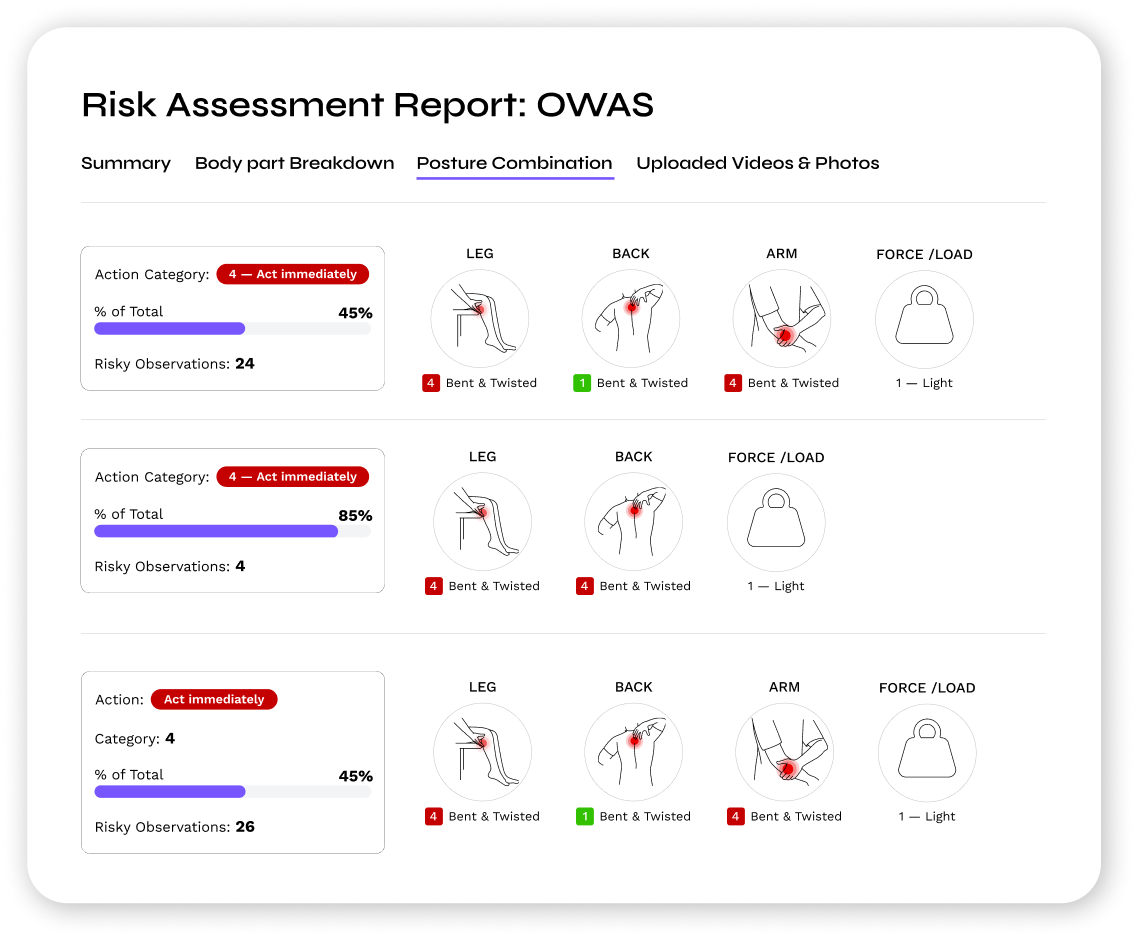
Certified ergonomists review complex driving tasks, cab setups, and depot workflows.
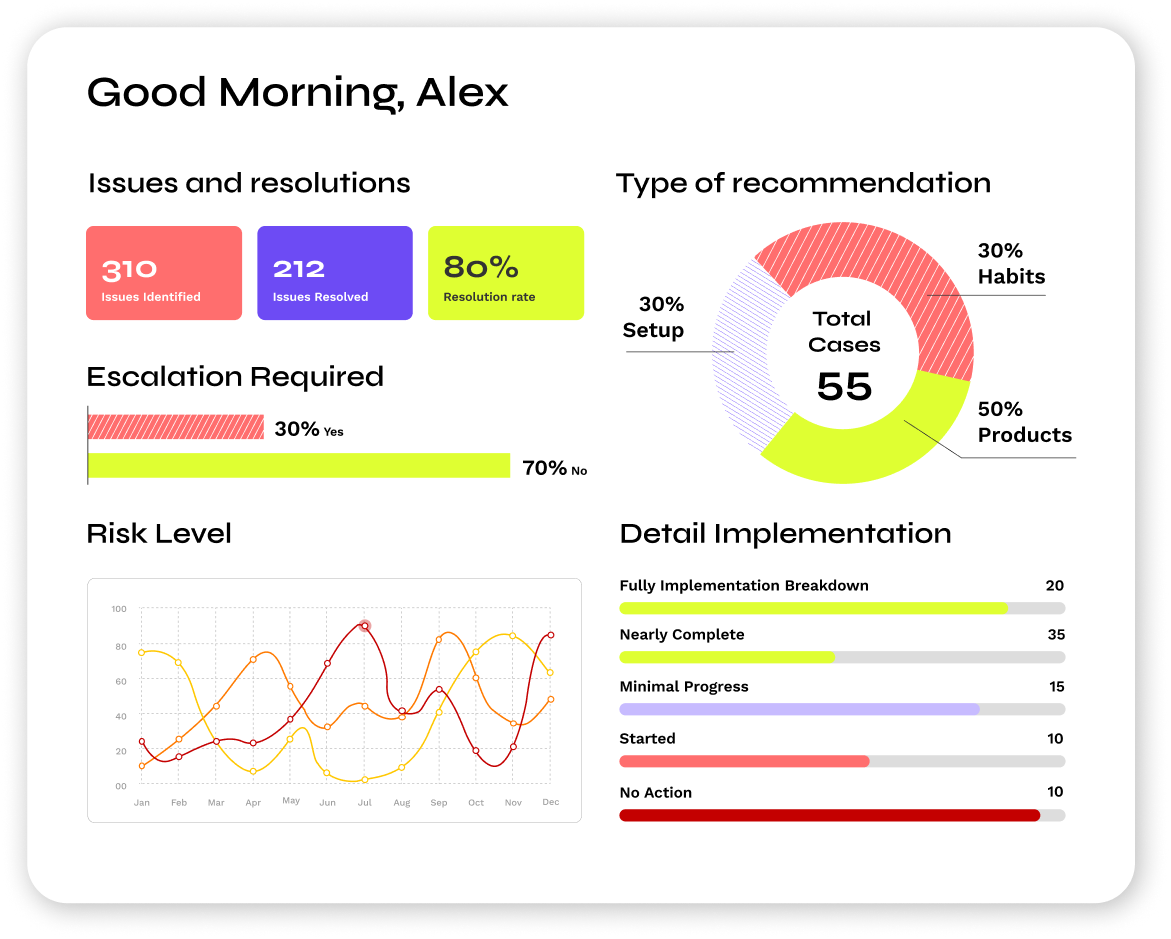
Dashboards show risk by fleet, depot, vehicle type, route, and role.
Recommendations cover cab improvements, seating, supports, and handling aids with supplier links.
Driver-focused training covers vibration awareness, cab setup, loading, and fatigue management.
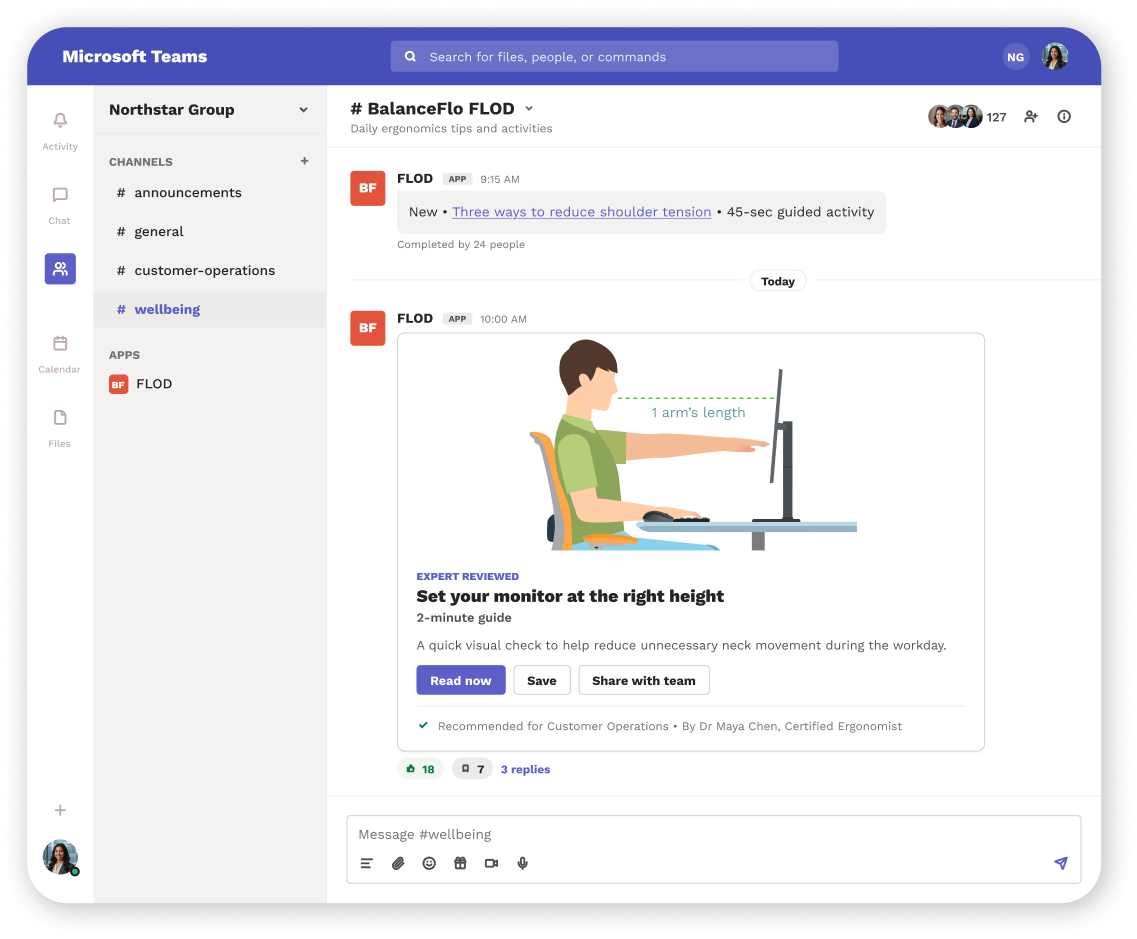
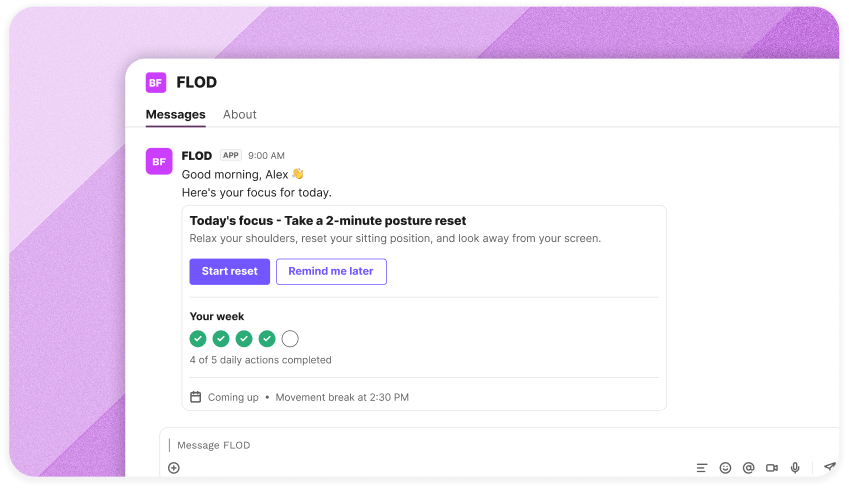
Daily nudges, chat guidance, and campaigns support route changes and seasonal demand.
On-demand ergonomists support driver cases, cab reviews, and fleet-level programme planning.
Results fleet safety and operations teams see after rolling out BalanceFlo across their driver network:

Versus traditional observer-based approaches.
And under active risk management.
Versus traditional models.
Including WBV regulatory requirements.
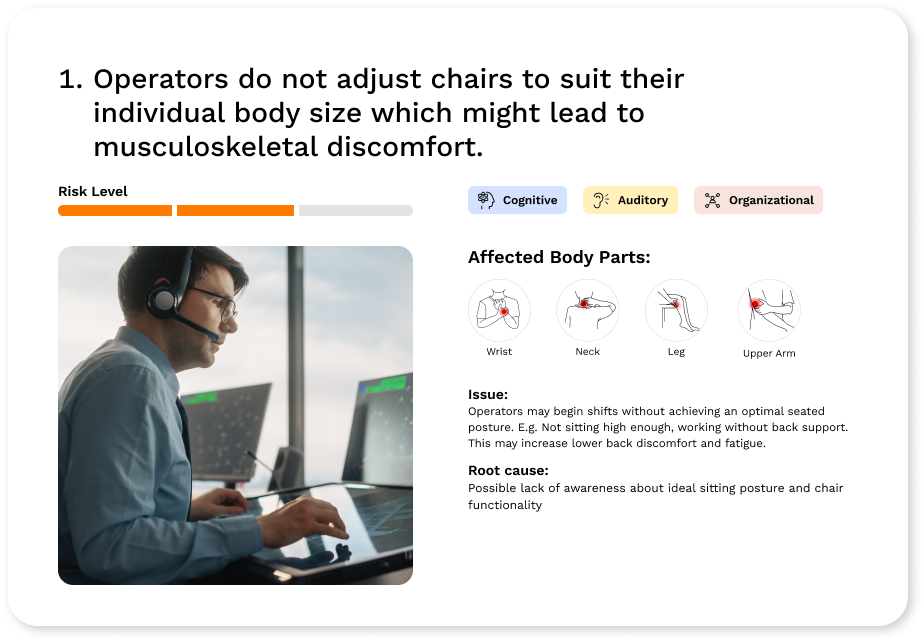
Intuitive visuals, clear risk indicators, plain-language outputs. Managers, employees, and safety teams take action immediately - no training course required to read a dashboard.
Practical guidance, regulatory updates, product insights, and workplace health trends - written by certified ergonomists, not content farms. If it's published under the BalanceFlo name, it's been reviewed by someone with a qualification to back it up.
Read Now
BalanceFlo's ROI calculator uses published BLS, OSHA, and academic data - and conservative estimates throughout. Here is what the numbers look like for a typical transport fleet:


Answer 5 quick questions and get a plan matched to your workforce size, industry, and programme maturity - in under a minute.